
Is anger a sin? According to Pastor Chris, the rush of anger isn't the sin. It's a flashing yellow light telling us something we hold dear may be in danger. The trouble comes with our response. The Bible allows the experience of anger but calls us to self-control.
Is anger a sin?
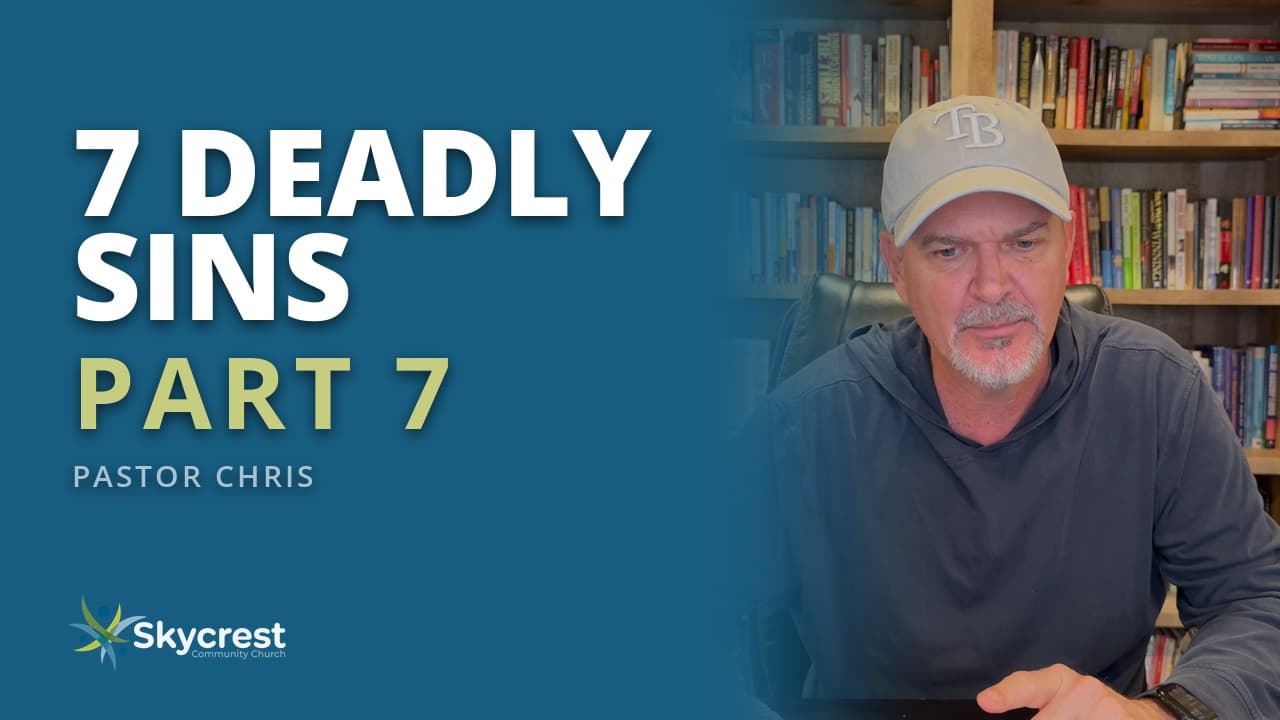
Pastor Chris started this message in a Rays hat. Game three of the World Series was that night at the Trop, he said, and he was all in. He was also hoping the game wouldn't tempt him with the fifth of the seven deadly sins.
That's a fair worry for anyone who has ever yelled at a television. So is anger a sin? Pastor Chris gave a plain answer: not all anger is sin. He described anger as a surge of adrenaline that alerts us to a threat.
Quoting Barbara Brown Taylor, he said anger tells us that something we hold dear is in danger. It might be our property, our beliefs, or our physical safety. Taylor thinks of it as "a kind of flashing yellow light." Caution. Something's going on here. Slow down and figure out what it is and what to do about it.
So the rush itself isn't what makes anger deadly. According to Pastor Chris, it's our response. A yellow light isn't a red one, and it isn't a green one either. Sometimes we should even be thankful for it.
What does the Bible say about controlling anger?
The Bible allows the experience of anger, Pastor Chris said, but it asks us for self-control that limits how we express it. He pointed to Proverbs 29:11. In effect, the verse tells us that a fool lets all of his anger spill out, while a wise person keeps himself under control.
Then he made an honest observation about most of us. When the yellow light flashes, we don't slow down. We speed up. And when we speed up, we lose control.
Think about the last time you felt that surge. The feeling showed up on its own, and you didn't ask for it. What you did next is the part Scripture speaks to.
Why do we love being angry?
Pastor Chris, again drawing on Taylor, said we love this sin. We pounce on the chance to be angry because it makes us feel alive. It invigorates us because anger hands us an enemy.
He walked through how that works. An enemy is wrong, which makes me right. An enemy looks bad, which makes me look good. Having someone to blame for our troubles also gives us a feeling of power and superiority.
That love grows out of a belief that we protect ourselves when we punish our enemy. Pastor Chris said we're wrong about that. When we speed up, anger isn't an asset. It's a liability.
He read Wayne Dyer, who called anger "a kind of psychological influenza that incapacitates you just as a physical disease would." Pastor Chris was clear that Dyer is talking about how we express anger, not the plain experience of it. So here's a question worth sitting with: what do we get out of being right, and what is it costing us?
How does anger cloud our judgment?
Pastor Chris said anger skews the way we see things, and he named three ways. Two of them come first.
First, anger objects to objectivity. When we're angry, we decide what we'll see before we look. We might investigate a situation, but like an attorney in a courtroom, we only ask the questions that produce the answers we want. He said we can't afford to be wrong in that state. And while an offense sparks the first fires of anger, imagination stokes them. We see things not as they are, but as we want them to be.
Second, anger impairs our decisions. In James 1:19-20, the passage tells us, in effect, to be quick to listen, slow to speak, and slow to become angry, because human anger doesn't produce the righteousness God desires. Pastor Chris said that righteousness brings freedom and peace, and that's what God wants for all of us. We may feel protected when we let anger loose. We may think we're doing what's best for the people we love. He said we're wrong.
Psalm 37:8 points the same direction. Paraphrasing the verse, it urges us to refrain from anger and not to fret, because that tends only toward evil. Pastor Chris listed what our anger does: it controls, manipulates, gossips, devours, and destroys. On the other side, he named protection, grace, freedom, encouragement, and edification as fruits of a life directed by the Spirit and shaped by self-control.
How do I slow down when I'm losing it?
The third way, Pastor Chris said, is that anger changes the way we look. He shared a story from Mary Gordon, who wrote about it in a series on the deadly sins in the New York Times Book Review.
It was a hot August afternoon. Gordon was in her kitchen making dinner for 10 people, her house was full of guests, and not one of them jumped in to help. Then her two small children and her 78-year-old mother came in, insisting she stop and take them swimming. They climbed into the car and leaned on the horn, shouting her name so the neighbors could hear.
She lost it. She flew outside, jumped on the hood of the car, and pounded the windshield. She described herself as becoming a huge bird, flapping and flapping, until someone finally got her off. When she came back to herself, she was appalled, because she had truly frightened her children. Her son told her, "I was scared because I didn't even know who you were."
Pastor Chris said anger distorts its host, physically and emotionally, beyond recognition. When we're angry, we don't know who we are, and neither does anyone else.
So what do we do? His answer was simple. Treat anger as a caution light and slow down. Our desires don't always have to be expressed. He said what separates us from the animals is that we can choose restraint. And for those of us who are believers, the Holy Spirit lives within us and gives us divine help to do it.
Here's an invitation for your week. The next time that surge hits, let it be a yellow light. Before you speak, pause long enough to ask what you hold dear that feels in danger. Then ask the Holy Spirit to help you choose restraint.
Key takeaways
- The rush of anger isn't the sin. Pastor Chris called it a flashing yellow light that tells us to slow down.
- The trouble comes with our response, so the Bible calls us to self-control, as in Proverbs 29:11.
- We love anger because it gives us an enemy, and an enemy makes us feel right and powerful.
- Anger clouds our judgment, impairs our decisions, and changes the way we look.
- We can choose restraint, and believers have the help of the Holy Spirit living within them.
Scripture in this message
- Proverbs 29:11 (NIV)
- James 1:19-20 (NIV)
- Psalm 37:8 (NIV)
Frequently asked questions
Is it a sin to feel angry?
Pastor Chris said not all anger is sin. Anger is a surge of adrenaline that alerts us to a threat, and sometimes we should be thankful for it. It becomes a problem in how we respond, which is why the Bible calls us to self-control.
What does Proverbs 29:11 say about anger?
In effect, Proverbs 29:11 tells us that a fool gives full vent to anger, while a wise person keeps himself under control. Pastor Chris used it to show that the Bible allows the experience of anger but calls us to limit how we express it.
Why do people love being angry?
Pastor Chris said anger gives us an enemy. An enemy is wrong, which makes us right. An enemy looks bad, which makes us look good. It gives us a feeling of power and someone to blame for our troubles.
How does anger affect our decisions?
Pastor Chris said anger impairs our decision-making and leads to irrational choices. He pointed to James 1:19-20, where James is saying that human anger doesn't produce the righteousness God desires, and to Psalm 37:8, which calls us to turn from anger.
How can I control my anger as a Christian?
Pastor Chris said to see anger as a caution light and slow down. We can choose restraint, he said, and believers have the divine help of the Holy Spirit living within them. Our desires don't always have to be expressed.